Are Koh Samui ATV Tours Safe?
Learn how safe Koh Samui ATV tours are, what risks to expect, how guides protect riders and what to check before booking an off-road tour.
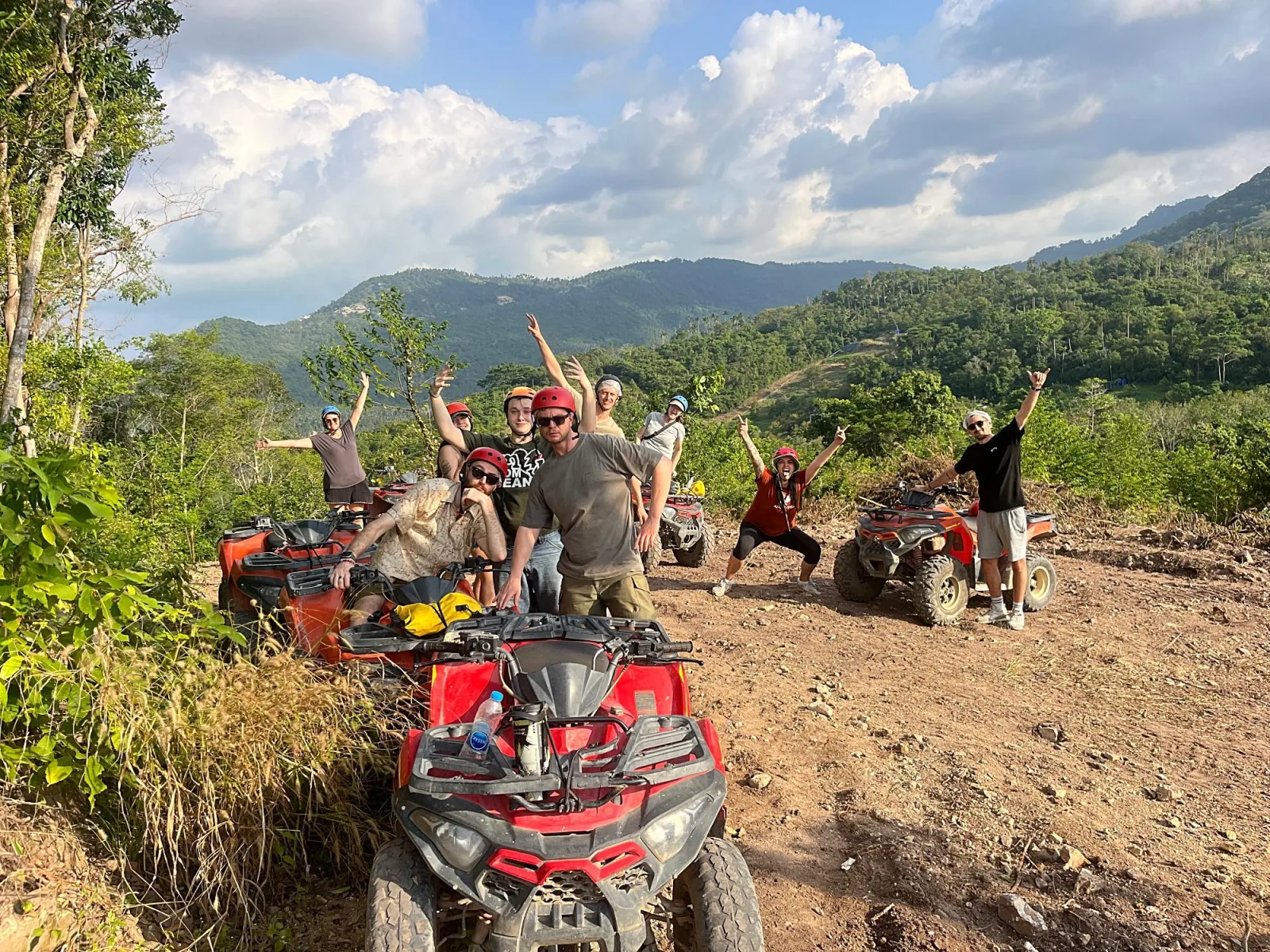
Koh Samui ATV tours can be suitable for beginners when they are operated responsibly, use maintained vehicles and include helmets, a proper briefing, practice time and guides on the trail. However, an ATV is a real motorised vehicle travelling over uneven ground, so the activity is not risk-free.
The safest approach is to choose the operator carefully, disclose any health concerns, follow the guide and ride more slowly than you think you need to. Ignoring instructions, following too closely and excessive speed add avoidable risk. There is no operator-by-operator accident dataset here that would justify calling one tour the safest.
Quick answer: A professionally run beginner ATV tour can be a reasonable adventure activity, but safety depends on the operator, route, weather and your own behaviour. Check the equipment, insurance and restrictions before booking.
Check Availability
Compare dates for Koh Samui: Premium 2-Hour Small-Group Jungle ATV Adventure. Check equipment, participant restrictions and the selected option before booking.
What safety measures should a good ATV tour provide?
A responsible Koh Samui ATV operator should provide:
- a correctly fitting helmet;
- a clear explanation of the controls;
- a safety briefing before the tour;
- time to practise away from the main trail;
- guides who ride with or supervise the group;
- vehicles appropriate for the route;
- a pace suitable for participants’ experience;
- clear driver and passenger restrictions;
- a plan for rain or unsafe trail conditions;
- information about accident insurance.
Some operators divide riders into groups according to ability. This can improve the experience because beginners are not pressured to keep up with confident riders, while experienced participants are less likely to become impatient behind a slower group.
What are the main risks?
Losing control on uneven ground
Ruts, loose stones, steep sections, mud and exposed roots can pull the vehicle away from the direction you expect. Hold the handlebars firmly, look where you want to go and approach difficult sections slowly and follow the guide’s braking instructions for that terrain.
Following too closely
The vehicle ahead may stop suddenly or lose traction. Maintain the distance specified by the guide and increase it in dust, rain or poor visibility.
Turning too quickly
An ATV can overturn during a sharp turn or on an unsuitable slope. Sharp steering at excessive speed can make the vehicle unstable. Slow down before corners and follow the guide’s instructions about body position.
Burns and contact injuries
Parts of an ATV can become hot. Keep your feet on the designated rests and wear closed shoes and suitable clothing.
Dust, mud and reduced visibility
Dry trails produce dust; wet trails create spray and mud. Use properly fitting riding goggles or impact-resistant eye protection; ordinary sunglasses may not provide adequate debris protection. Never remove your helmet while the group is moving.
Overconfidence
Automatic controls can make an ATV feel easy within minutes. That does not mean the terrain is predictable. Stay within your ability even if another participant rides faster.
Are ATV tours suitable for complete beginners?
Lexi’s two-hour small-group tour lists a dedicated practice area and groups matched by experience. Those are useful features to compare, not proof of a lower accident rate. By contrast, Samui Quad Motor’s safari states that it is not suitable for beginners.
Many Koh Samui tours are designed for people with no previous ATV experience. Automatic vehicles remove the need to manage a clutch or manual gears, and the guide should demonstrate acceleration, braking, steering and safe body position.
A beginner-friendly experience should start on flat or easy ground. Use this practice time honestly. Ask questions if you are uncertain and tell the guide if the vehicle feels too large, the throttle is difficult to control or you do not feel confident.
You should not be embarrassed to ride more slowly or switch to a passenger option where available. The aim is to enjoy the route, not prove your driving ability.
Read the first-time rider guide →
How to choose a safer ATV operator
Price matters, but it should not be the only basis for your decision. Before booking, examine the tour description and recent reviews for evidence of good organisation.
Look for comments about:
- attentive guides;
- clear instructions;
- vehicle condition;
- manageable group sizes;
- practice before the trail;
- guides helping nervous riders;
- sensible handling of bad weather;
- helmets in appropriate sizes;
- groups being separated by skill.
Be cautious if recent reviews repeatedly mention broken controls, rushed briefings, excessive speed, overcrowding or poor supervision. One unhappy review does not necessarily define an operator, but repeated patterns deserve attention.
What should you check before starting?
You do not need to be a mechanic, but take a few moments to familiarise yourself with the vehicle.
Check that:
- the helmet fits and fastens securely;
- you can reach and operate the controls comfortably;
- the brakes respond during practice;
- the throttle returns properly when released;
- your feet rest securely in the intended position;
- there are no obviously loose parts;
- a passenger has an appropriate seat and secure handholds;
- you understand the guide’s signals.
Report anything that feels wrong before entering the trail. Do not accept a vehicle you cannot control comfortably.
Essential rules while riding
Keep both hands on the handlebars
Do not film, use your phone or adjust belongings while driving. Stop in a safe place before taking photos.
Keep your feet on the footrests
Putting a foot on the ground can lead to it being pulled beneath or struck by the vehicle.
Ride at your own pace
Do not let friends or faster riders pressure you. A guide can normally wait, adjust the group or move you to a more suitable position.
Leave enough space
Dust can hide obstacles and the rider ahead may brake unexpectedly. Maintain a safe gap throughout the tour.
Follow the guide’s line
The guide usually knows where the deepest holes, loose edges and difficult sections are. Do not create your own route or overtake unless instructed.
Never drink and drive
Do not consume alcohol or impairing substances before the tour. An operator can refuse participation if a guest appears unfit to ride.
Are ATV tours safe in the rain?
Light rain does not automatically stop an ATV tour, and many riders enjoy the muddier conditions. Rain can, however, reduce traction and visibility, deepen ruts and make slopes more demanding.
The operator should assess the route and weather rather than following a fixed rule. Heavy rain, flooding, thunderstorms or damaged trails may require a delay, route change, rescheduling or cancellation.
In wet conditions:
- leave additional space;
- use smoother steering and braking;
- avoid sudden acceleration;
- follow the guide’s route exactly;
- stop and ask for help if traction feels uncertain;
- keep goggles or glasses clear;
- wear shoes with good grip.
Read about rainy-season ATV tours →
Are ATV tours safe for children?
Children may be able to join as passengers, and some operators allow older children or teenagers to drive under specific conditions. Operator admission rules vary, but permission to book is not evidence that a vehicle is suitable for a child. The US Consumer Product Safety Commission advises against children under 16 driving or riding adult ATVs. This is safety guidance, not a statement of Thai law; check the manufacturer’s age and passenger limits as well as the booking terms.
Suitability depends on more than age. A child must be able to sit securely, keep feet in the correct position, hold on and follow instructions for the entire route.
Parents should confirm:
- minimum passenger and driver ages;
- any height or weight rules;
- whether the child rides behind an adult or in a buggy;
- whether a suitable helmet is available;
- which route and duration are recommended;
- whether insurance covers the child;
- whether the booking can be changed if the child refuses to ride.
Never assume that a child can drive because another company or destination allowed it.
Check the family and age-limit guide →
ATV passenger safety
For the featured Lexi option, the listing currently states a maximum combined driver-and-passenger load of 140 kg. This is an operator-specific limit, not an island-wide rule.
A passenger should only ride on an ATV designed and approved for two people. They must use the intended seat and handholds and follow the driver’s movement without distracting them.
The driver should avoid abrupt acceleration and aggressive turns. Carrying a passenger changes the vehicle’s weight, steering and braking response.
If a passenger is nervous, has difficulty holding on or cannot place their feet securely, a side-by-side buggy may be a better option.
ATV versus buggy safety
A buggy normally includes seats, belts and a protective frame, while an ATV leaves the rider more exposed and requires active balance. This does not make every buggy tour safer than every ATV tour.
A buggy is wider and heavier, and it still travels over rough terrain. Occupants must wear the required protective equipment, fasten their belts and keep arms and legs inside the frame.
The quality of the operator, the suitability of the route and the driver’s behaviour remain critical for both vehicle types.
Who should think carefully before booking?
ATV tours may be unsuitable for some travellers, including people who are pregnant or have certain back, neck, joint, heart, balance or mobility conditions. Restrictions vary, and only a qualified healthcare professional can advise whether the activity is appropriate for your circumstances.
Contact the tour provider before booking if you:
- are pregnant;
- have a recent injury or operation;
- experience serious back or neck problems;
- have limited grip strength or mobility;
- take medication that causes drowsiness;
- have a condition affected by heat or exertion;
- are unsure whether you can safely control the vehicle.
Do not conceal a relevant condition simply because the activity is prepaid.
What does the included insurance cover?
One specific exclusion matters for families: Lexi’s listing says guests riding free have no personal accident insurance coverage. Confirm cover for every participant directly before booking; do not infer it from “family-friendly” or a free child place.
Many organised tours advertise basic accident insurance, but coverage and exclusions differ. It may have limits, excesses or conditions concerning age, intoxication, protective equipment and failure to follow instructions.
Ask whether the policy covers:
- medical treatment after an accident;
- passengers as well as drivers;
- children of the relevant age;
- damage to the ATV;
- personal belongings;
- transport to a medical facility.
Your normal travel insurance may exclude quad biking unless certain conditions are met. Check the adventure-activity section of your policy before travelling.
What should you wear for safety?
Wear secure boots, long trousers, long sleeves and riding gloves, with nothing loose that could catch on the vehicle. Tie back long hair and secure phones, cameras and bags.
The operator should provide a helmet. Use goggles or suitable impact-resistant eye protection. These clothing recommendations follow the ATV Safety Institute’s protective-gear guidance.
See the complete ATV clothing checklist →
Safety questions to ask before booking
- Is the tour suitable for complete beginners?
- How long is the practice session?
- Are helmets and goggles provided?
- Are groups divided by ability?
- What are the driver and passenger age limits?
- Is the advertised duration actual riding time?
- What happens in heavy rain?
- What insurance is included?
- Can a nervous driver switch to passenger status?
- Are there medical or weight restrictions?
Clear, specific answers are a positive sign. Vague promises that everything is “completely safe” should be treated cautiously because no motorised adventure activity is free from risk.
Frequently asked questions
Do I need ATV experience?
Usually not for beginner tours. You should receive instructions and practice before entering the main trail.
Do I need a driving licence?
Lexi’s listing says no driving licence is required for its guided ATV activity. That does not establish the rules for every tour or permission to drive on public roads. Confirm the route and requirements; see our driving-licence guide.
Is a helmet included?
Reputable operators normally provide helmets. Make sure yours fits properly and remains fastened throughout the ride.
Can an ATV flip over?
ATVs can become unstable if driven too quickly, turned sharply or used incorrectly on slopes. Follow the guide, slow down and use the body position taught during the briefing.
What if I become frightened during the tour?
Signal the guide and stop where instructed. Depending on the operator, you may be able to slow the group, receive extra help or continue as a passenger.
Are private tours safer?
A private tour can offer a pace tailored to your ability and more direct attention, but it does not remove the inherent risks of off-road riding.
Making a safer booking decision
Koh Samui ATV tours can be enjoyable for first-time riders when the operator provides suitable equipment, training, supervision and a route matched to the group. Your choices also matter: wear the helmet, leave space, control your speed and never try to impress other riders.
Choose a tour based on recent reviews, safety practices and route suitability—not price alone. If you are still asking is a Koh Samui ATV tour worth it, that guide sets out what good value looks like. If anything feels wrong during the briefing or practice session, speak up before the group enters the trail.
Ride Koh Samui's Jungle Interior
Compare routes, practice time and equipment before choosing your Koh Samui ATV tour.
Check Availability & Book